

NATO HAS LOST THE WAR
The First Battle Before World War III

“We Must Confront Vladimir Putin Not Reset Relations with Him” - John McCain
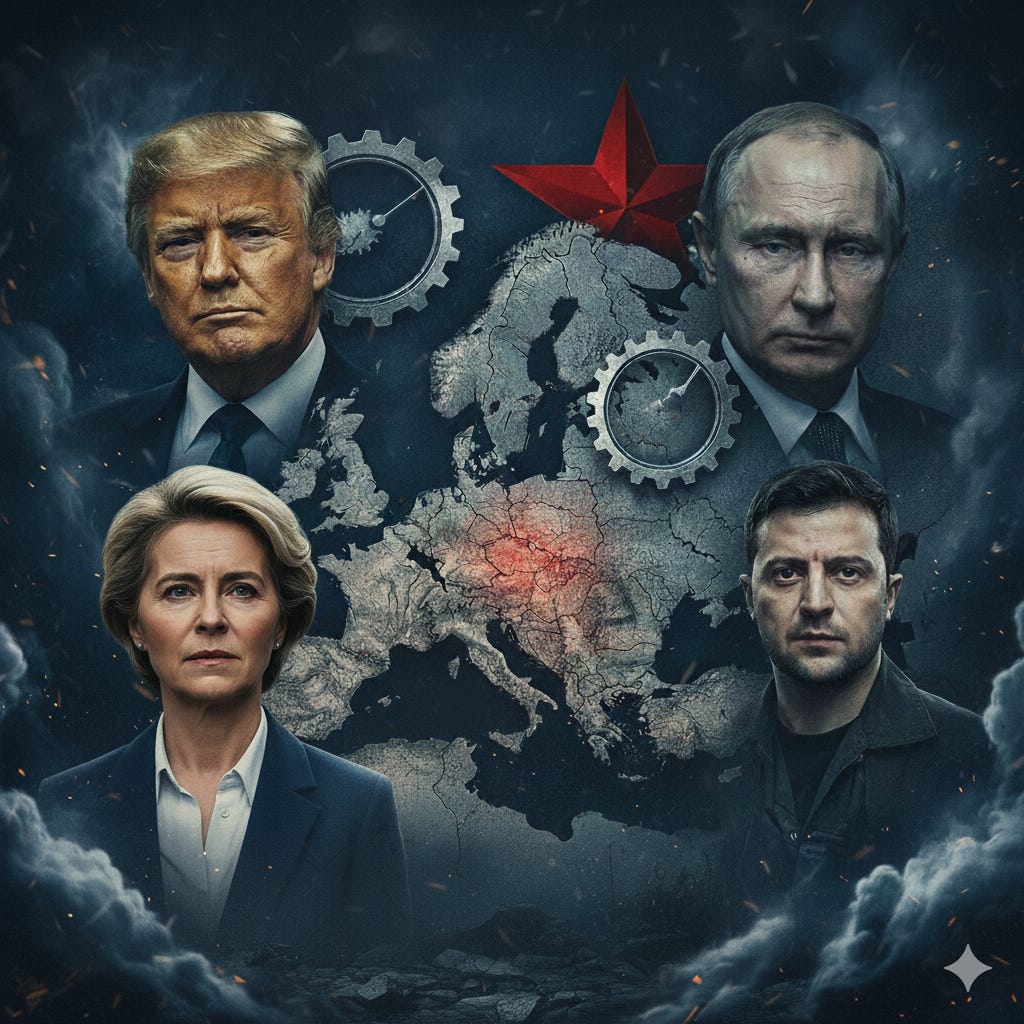
Russia is not a country or a nation-state as we commonly understand the term when referring to nations like Germany, Poland, or Japan. It is an Empire sprawling across a vast landmass, stretching from the European plain to the Far East. Moscow is not a typical capital city like Berlin, Paris, or London, nor is it comparable to Washington D.C. The Russian capital is, in fact, an Imperial Headquarters controlling over 190 ethnic groups, fostering more than 277 languages and dialects, and embracing a complex mixture of over five major religions.
The Geographic Imperative
Consequently, any consideration of borders, security, and defensive lines must adopt an Imperial perspective. For Americans, driving seamlessly from one state to another under the same currency, language, and political system is self-evident. Washington is the modern Rome, but life in the Russian Federation, a federation of disparate ‘provinces,’ is far more complex and extremely difficult to control centrally.
The key element is Geography, and the Russians live this reality “to their bones.” Moscow lacks natural geographic barriers - no mountain ranges, no vast deserts, and most critically, no protective oceans like those shielding the American mainland. Moscow’s enduring fear has always been existential vulnerability, as captured by Tsar Nicholas I’s famous quote: “Russia has two generals it can rely on – General January and General February.”
These constraints compel Moscow to continually seek territorial expansion and to create buffer zones, distancing itself from perceived or imaginary threats. This compulsion renders irrelevant the optimistic peace talks occurring in European capitals or Washington. Russia, as an Empire, lost enormous territories following the collapse of the Soviet Union. The loss of satellite states and republics, such as Kazakhstan, Uzbekistan, Estonia, and Poland, created a new, unstable geopolitical landscape that profoundly shook the Russian regime.
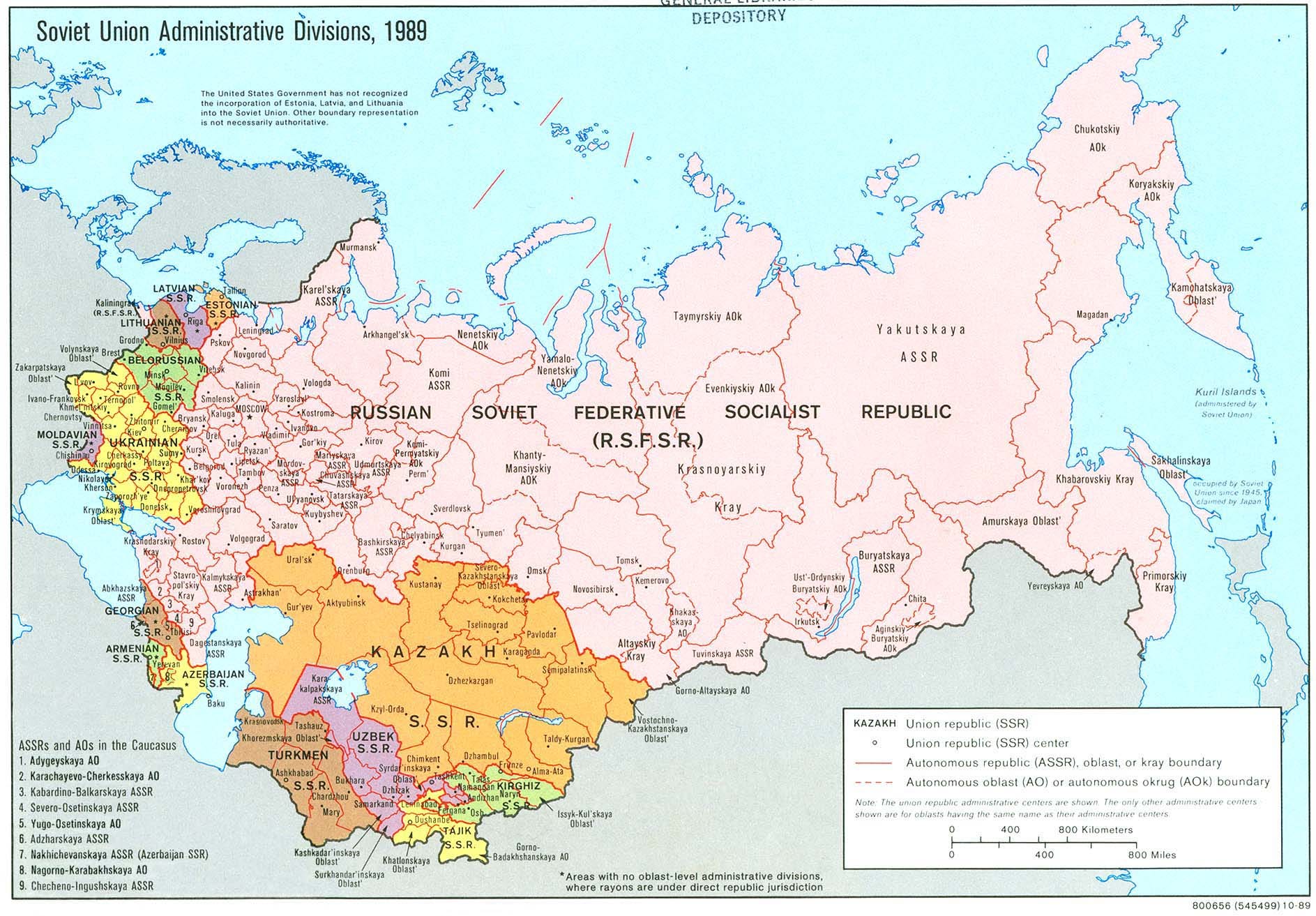

The prosperity of countries like Estonia and Poland, and the new investments flowing into Kazakhstan, serve as potent signals to other ethnic groups within the Russian sphere, encouraging them to revolt and fight for self-determination. Russia’s sphere of influence has been severely degraded since the fall of the USSR, and it will continue to shrink as the influence of the United States grows.
The Trump administration views the Central Asian region as crucial, not only for counterbalancing China’s “Belt and Road Initiative” but also for engaging more closely with territories bordering Russia. Russia’s efforts to block this process are destabilizing the region, creating chaos in areas like Ukraine, Georgia, and Central Asia.
The Ukraine Conflict and the Energy Gambit
The war between Russia and Ukraine was not unexpected, as Ukraine became a critical geopolitical testing ground for both the U.S. and Russia. While the U.S. saw an opportunity to contain Russian influence, Moscow perceived NATO’s expansion as an existential threat. Consider the analogy: How would Americans react if Russian military forces heavily invested in arming Mexico’s army? The Cuban Missile Crisis of 1962 already provided a stark answer.
The 2022 invasion of Ukraine exposed many geopolitical vulnerabilities and forced the West to craft a new defense policy. For years, European, Japanese, and U.S. leaders attempted to appease Putin by overlooking aggressions, such as the war in Georgia, assassinations, money laundering, and intervention in Africa, in a failed attempt to avoid confrontation.
Furthermore, the U.S. viewed Russia’s attempt, in partnership with Europe, to create an Energy Powerhouse via the Nord Stream projects as a direct threat to U.S. energy interests. This context led former Secretary of State Condoleezza Rice to articulate a new energy strategy for Europe in 2014:
“Rice calls for changing the structure of energy dependence in the long run. She suggests that countries rely more on the North American energy platform—’the tremendous bounty of oil and gas that we’re finding in North America.’”
By reducing Russia’s economy from a diverse industrial base to primarily an energy and raw materials hub, Putin has made Russia dangerously dependent on exports. This has constrained its ability to develop a diverse economy, unlike China. Paradoxically, in seeking new energy customers, Putin is forced to adopt a more diplomatic, less confrontational stance toward China. Despite this, the sphere of influence in Siberia - especially the energy-rich areas adjacent to the Chinese border - remains fragile, a weakness China is actively exploiting.
No Victory, Only Trade-Offs
There are no decisive solutions for the ongoing situation on Russia’s western border; only trade-offs exist. Ukraine cannot achieve an outright victory, and Putin cannot risk his political stability by implementing a mass mobilization of young Russians from Moscow and St. Petersburg.
The report published on Axios by Barak Ravid highlights this difficult reality by describing the proposed 28-point plan for a ceasefire:
“The new Trump plan to end the war in Ukraine would grant Russia parts of eastern Ukraine it does not currently control, in exchange for a U.S. security guarantee for Ukraine and Europe against future Russian aggression, a U.S. official with direct knowledge told Axios.”
“The White House view, according to the U.S. official, is that Ukraine is likely to lose the territory anyways if the war continues and ‘therefore it is in Ukraine’s interest to reach a deal now.’ The 28-point Trump plan calls for Russia to gain full de facto control of Luhansk and Donetsk (together referred to as the Donbas), despite Ukraine still controlling around 14.5% of the territory there, per the latest analysis by the Institute for the Study of War.”
The development of a U.S.-led plan to end the war, without clear European representation, reveals the deep fissures in the Western alliance to both Russia and China. Sadly, there is no unity. The U.S. is strategically overstretched globally, while Europe finds itself largely outside the global decision-making arena for the first time in centuries. Russia, meanwhile, is bolstered by North Korea, Iran, and China, and gains access to the global markets with the crucial assistance of India.
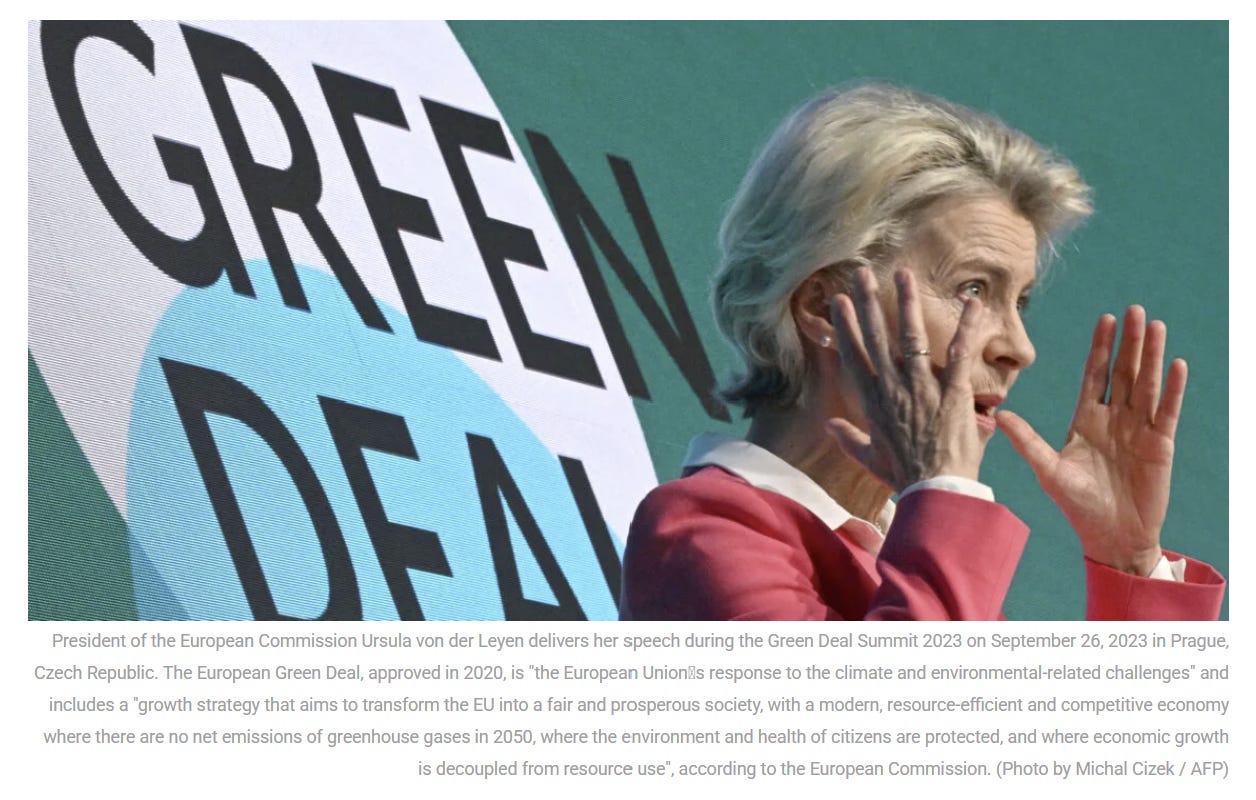
The primary losers are the Europeans, who once benefited from cheap natural gas. Now, because of the war, they are forced to pay for expensive Liquid Natural Gas (LNG). The lifeblood of the European industrial complex is cheap energy. For years, the European Union chose to underinvest in drilling, fracking, and nuclear reactors, favoring expensive renewables. This policy has rendered Europe an Energy Vassal to China, the U.S., and Russia.
The Failure of Sanctions and NATO’s Defeat
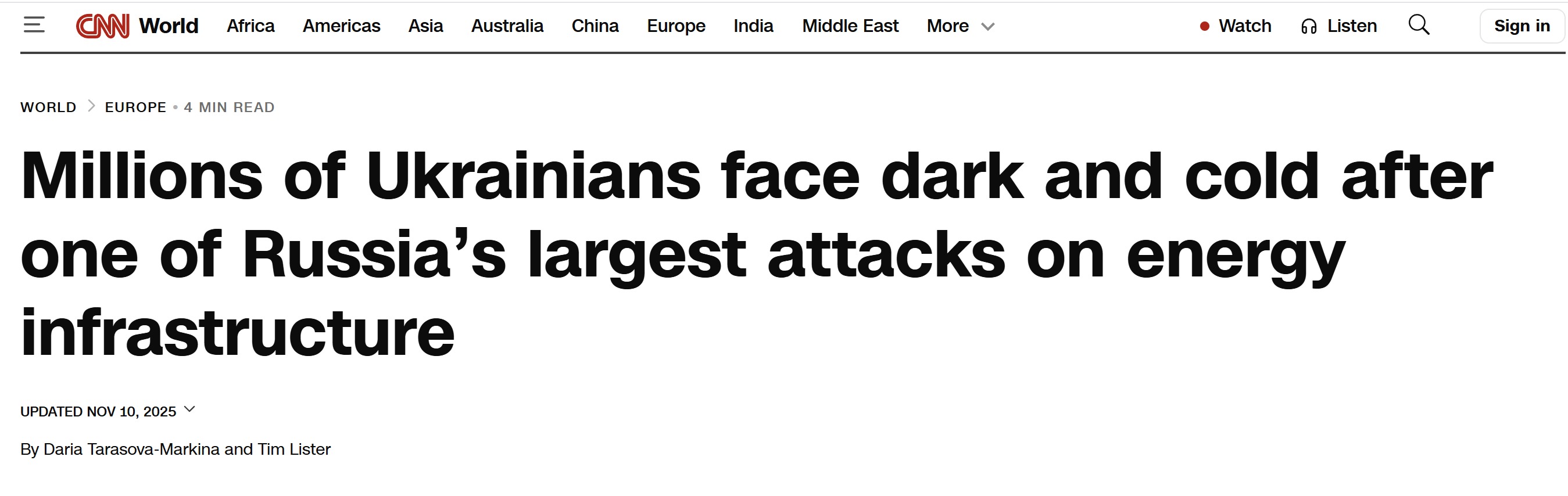
The West’s strategy to win this battle by sanctioning Russia and its oligarchs backfired. The world cannot function without energy, and certainly not without Russia’s supply. Instead of suppressing energy prices, the West chose to inflate them through mechanisms like the price cap. These artificially high prices enriched the Russian economy, funding Putin’s commitment to a War of Attrition that slowly but surely consumes almost the whole country of Ukraine.
Furthermore, sanctioning Russian oligarchs forced them to remain under Putin’s protection. A more strategic alternative would have been to allow them to operate as a shadow political force, potentially leveraging them as a tool against Putin’s war efforts.
The truth is that the West cannot win a protracted conflict without a full, global commitment—financially, militarily, and through trade. The war effort pushed NATO to its limits, resulting in its ultimate classification as the loser of the war due to hesitation and lack of coordinated strategy. NATO lost the war; it was not defeated on the battlefield, but defeated strategically. The Trump administration understands this and is seeking an exit from what appears to be an unending conflict.
The European Union leadership understands this existential threat. A significant loss to Russia, led by the EU, could ultimately lead to political chaos and turmoil unless a new, decisive leadership emerges and demands that Europeans fundamentally change their strategic trajectory.
Thank you for taking the time to read this analysis. If you found this perspective insightful, please consider subscribing to our publication for more deep dives into global politics.
Don’t forget to share this article with friends and colleagues who might be interested, and please show your support by clicking the like button! ❤️